



Vacuum Degasser
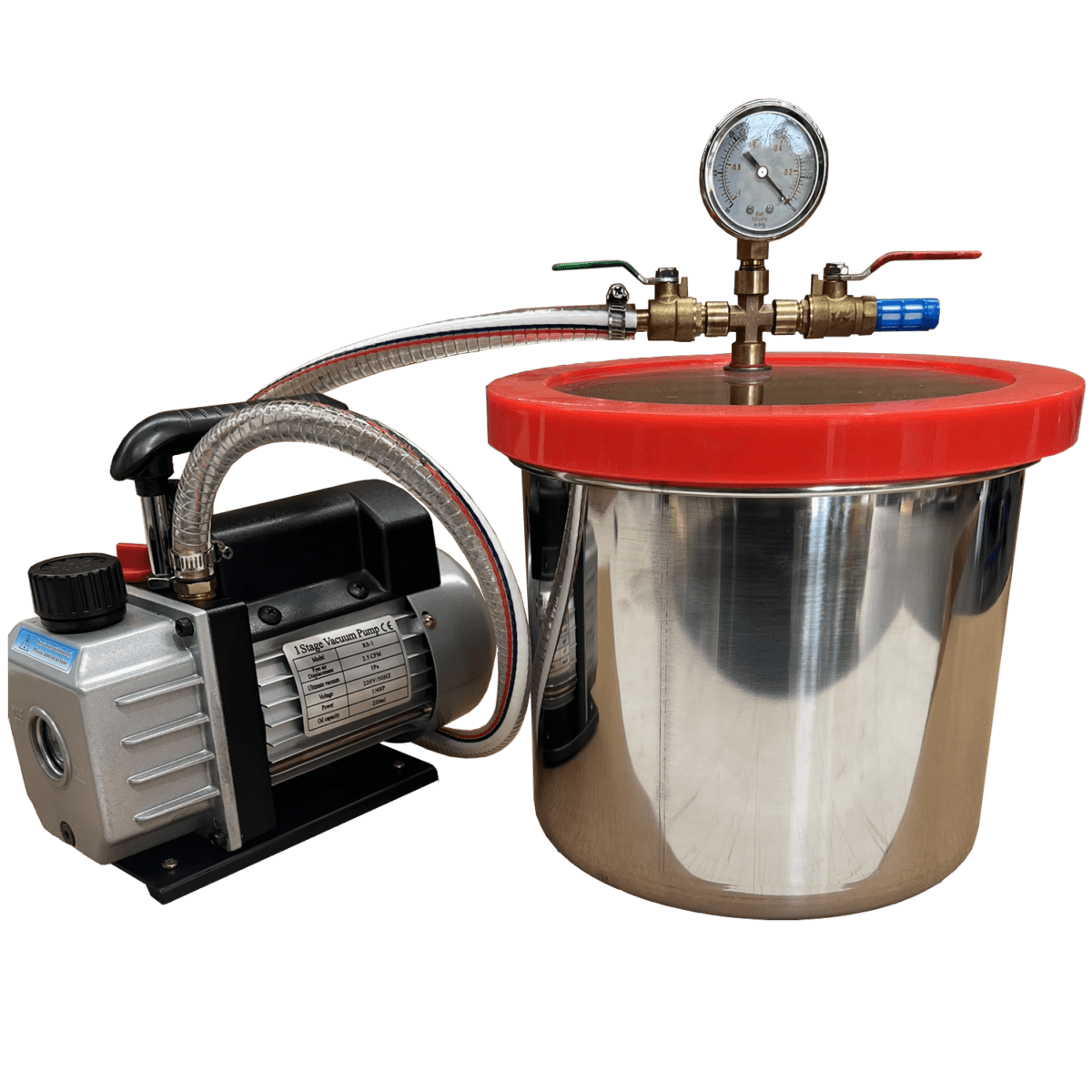
The Barnes Vacuum Degasser is a compact and portable system designed to remove entrapped air from liquid silicones, resins and other compatible casting materials before pouring. Vacuum degassing can help minimise bubbles in the finished casting or mould, particularly when working with viscous materials or systems that may trap air during mixing.
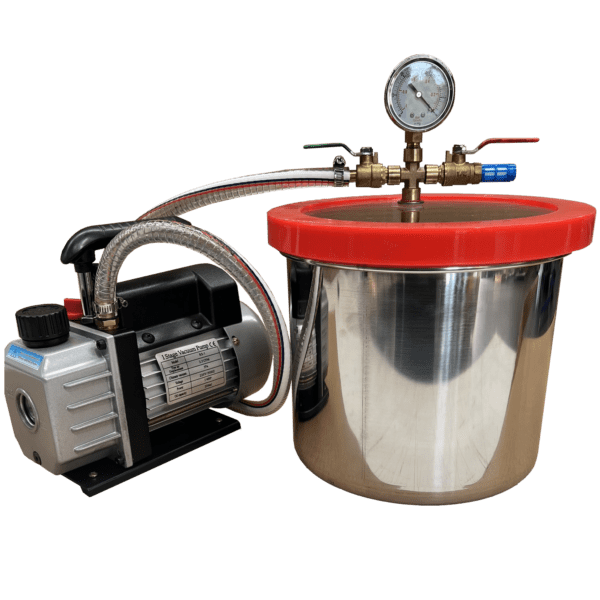
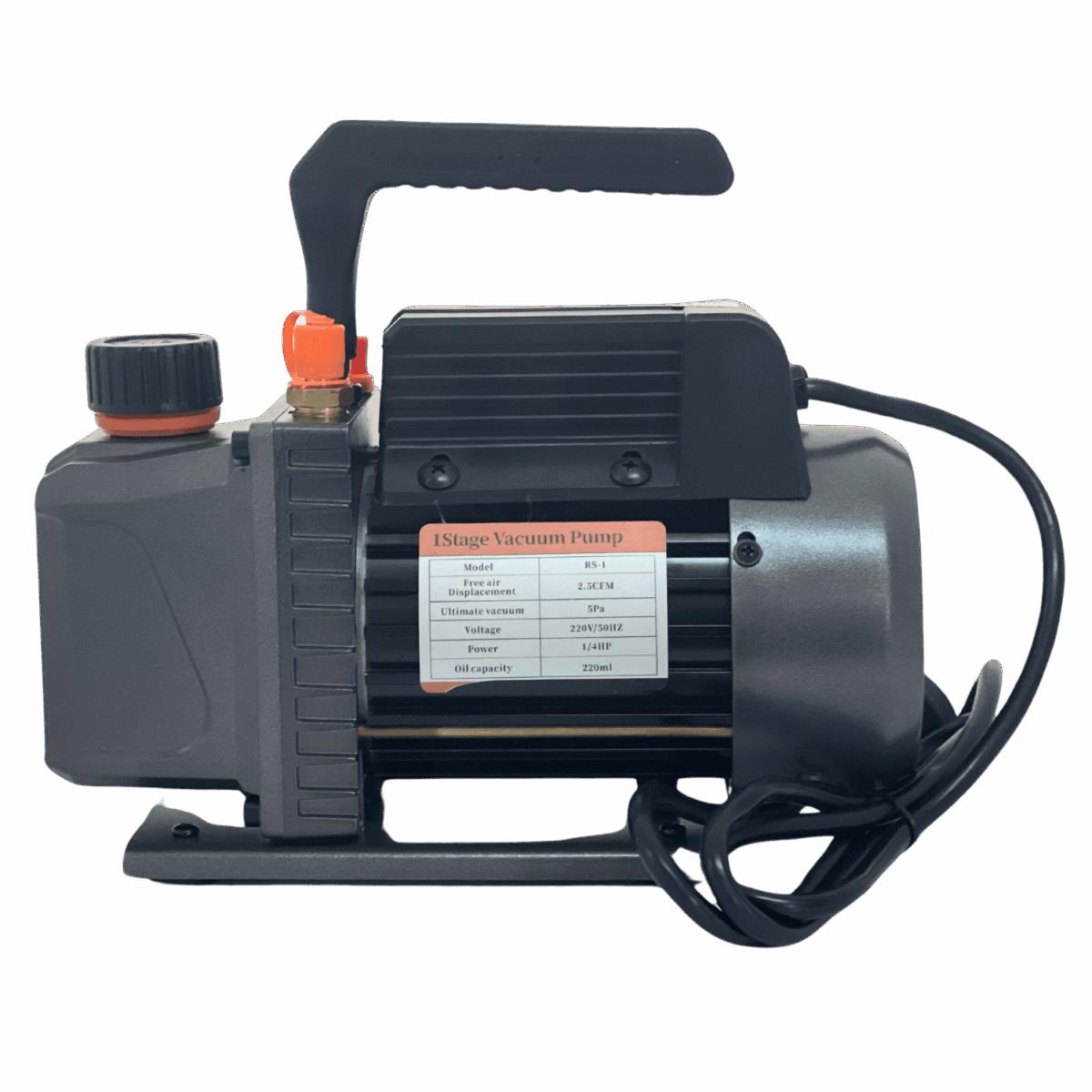
The system combines a 3 CFM vacuum pump with a 6 L stainless steel vacuum chamber and clear acrylic lid, allowing you to observe the material as it expands and collapses during the degassing process.
What is Vacuum Degassing?
When a mixed material is placed under vacuum, entrapped air expands and rises to the surface. The material may initially increase significantly in volume or foam upwards before gradually collapsing as the air is removed.
For this reason, always use a container considerably larger than the volume of material being degassed and monitor the material throughout the process.
Vacuum degassing is generally performed prior to pouring the material into a mould or casting. It is different from pressure casting, where pressure is applied to a poured casting during its cure.
What is Included?
Vacuum Pump Box
- 3 CFM vacuum pump
- Vacuum oil
- Instruction booklet
Vacuum Chamber Carton
- 6 L stainless steel vacuum chamber
- Clear acrylic lid
- Vacuum hose
- Hose clamps
- Vacuum gauge
- Silicone mat
- Brass tail piece
Approximate chamber dimensions: 220 mm diameter × 200 mm deep
How Long Does Vacuum Degassing Take?
There is no single degassing time suitable for every material. The time required will depend primarily on four factors:
- 1. Type of material – Different silicone, polyurethane and epoxy systems behave differently under vacuum.
- 2. Viscosity – Thicker materials generally release entrapped air more slowly than low-viscosity materials.
- 3. Elasticity – Particularly with silicones, the elasticity and rheology of the material can affect how readily bubbles expand, rise and break under vacuum.
- 4. Volume of material – Larger batches will generally require more time and sufficient container capacity to accommodate the material’s expansion under vacuum.
Always consider the working or pot life of the material when determining whether vacuum degassing is appropriate.
Intended Use & Limitations
The Barnes Vacuum Degasser is designed for short-duration vacuum degassing of casting materials prior to pouring. It is not designed to maintain a vacuum for extended periods or to operate repeatedly for hours at a time.
Do not use this unit for timber stabilisation, vacuum drying, vacuum impregnation or other applications requiring prolonged or continuous vacuum operation.
For applications where a vacuum must be maintained for several hours, specialised equipment designed for continuous or extended-duty vacuum operation should be used.
Vacuum Degassing vs Pressure Casting
Vacuum degassing removes entrapped air from a liquid material before it is poured.
Pressure casting applies positive pressure to a poured material during curing, compressing remaining bubbles until they are extremely small.
For many silicone and resin applications, vacuum degassing is an effective way to improve consistency and reduce visible air bubbles when used with an appropriate material and technique.